How Winter Weather Affects School Bus Safety and School Closures
When schools close for winter weather, families often judge the decision by the conditions they can see outside their own homes. If the main road looks clear and only a few inches of snow have fallen, a closure can seem unnecessary. But a school district has to answer a much broader question: can students be transported safely across the entire district?
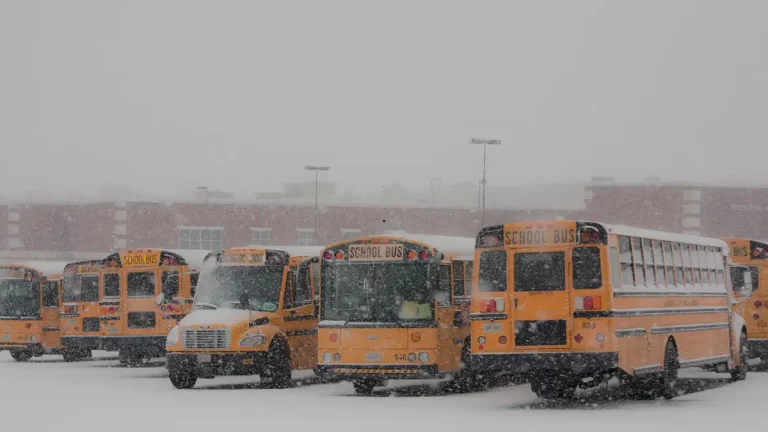
That is why school-bus transportation is such an important part of snow-day decisions. A district may operate dozens or hundreds of routes covering residential streets, rural roads, bridges, hills and secondary roads that are not cleared as quickly as major highways. Conditions can also vary significantly from one side of a district to another.
A useful Snow Day Calculator therefore has to look beyond snowfall alone. Snow, ice, wind, visibility, extreme cold and the timing of a storm can all affect whether normal school transportation is practical the following morning.
Why School Bus Routes Can Be Harder to Manage Than a Normal Commute
Most commuters can choose a relatively direct route to work and often spend much of that journey on major roads. School buses operate differently. They make repeated stops, enter neighborhoods, travel secondary roads and may cover long rural routes before students ever reach school.
This matters during winter weather because road treatment is rarely identical everywhere. A major highway may be plowed and salted early while a residential street or rural road remains snow covered. A bridge may become icy before surrounding pavement. A hill that is normally routine can become difficult when traction is reduced.
A school district therefore cannot make its decision based only on conditions around the school building or on the most heavily maintained roads in town. Transportation officials must consider the entire network of routes students actually use.
That explains a situation many parents have experienced: the road outside their home looks fine, but school is still closed. The decision may be based on conditions somewhere else in the district that most families never see.
Snow and Ice Create Different Transportation Problems
Snow can affect school-bus routes through accumulation, reduced traction, drifting and poor visibility. The impact often depends on how quickly it falls and whether road crews have time to keep routes clear.
Several inches falling gradually overnight can sometimes be managed before buses begin operating. The same amount falling rapidly between 5:00 AM and 8:00 AM can be much harder to handle because roads may become covered again soon after plows pass.
Freezing rain creates a different problem. Even a relatively small amount of ice can reduce traction on bridges, hills, intersections and untreated roads. Unlike snow, which is usually easy to see, a thin glaze can make pavement dangerously slippery without appearing dramatic.
That is why snow and ice should not be treated as interchangeable measurements. Four inches of snow and a thin layer of freezing rain can create very different transportation risks.
For a deeper comparison of those hazards, see Freezing Rain vs. Snow: Which Is More Likely to Close Schools?.
Why Timing Can Change the Decision
The timing of winter weather can be just as important as the total accumulation.
Consider two storms that both produce four inches of snow. In the first, the snow ends around midnight. Road crews then have several hours to plow, treat intersections and clear major bus routes before the morning commute.
In the second, snow begins at 5:00 AM and becomes heaviest around 7:00 AM. Now crews are trying to clear roads while new snow continues to accumulate, visibility may be falling and buses would need to operate while conditions are getting worse.
The final snowfall total is identical, but the school transportation problem is not.
This is also why districts sometimes choose a delayed opening instead of a full closure. If a storm ends shortly before sunrise, an extra one or two hours may give road crews enough time to improve secondary routes and allow daylight to make conditions easier to evaluate.
Freezing rain can create the same situation. Roads may be hazardous during normal pickup time but improve later if precipitation stops and temperatures rise above freezing.
A snow day calculator for tomorrow is therefore more useful when it considers what conditions may be like during the school commute rather than simply reading the daily snow total.
Visibility, Wind and Rural Roads Can Make a Moderate Storm More Serious
Winter transportation risk is not always obvious from accumulation numbers.
Strong wind can blow loose snow across roads, reduce visibility and create drifting after a road has already been plowed. Open rural roads can be particularly vulnerable because wind has fewer obstacles and snow can repeatedly move back across the roadway.
Visibility also matters because school-bus drivers need enough distance to identify intersections, road edges, other vehicles, pedestrians and designated stops. Heavy falling snow or blowing snow can make a road technically passable while still making normal transportation difficult.
Rural districts often face additional challenges because routes can cover large geographic areas. Conditions on one side of the district may be significantly worse than another, and secondary roads may receive less frequent treatment than the roads most commuters use.
This is why neighboring school districts can make different decisions during the same storm. Their weather may be similar, but their transportation networks may not be.
Student Safety Begins Before the Bus Arrives
School transportation safety is not limited to the time students spend inside the bus.
Many students walk to a pickup point and wait outside before the bus arrives. Snowbanks can reduce visibility near intersections, icy sidewalks can make walking difficult and extremely cold temperatures can create additional concerns for students waiting outdoors.
The National Weather Service specifically advises schools to prepare for closures caused by snow, ice or extreme cold and says school-bus drivers should receive additional winter-weather driving training because road conditions can deteriorate quickly. You can read that guidance on the National Weather Service winter preparedness page.
This wider view helps explain why a district might alter its schedule even when buses themselves could technically travel. Schools have to think about the entire journey from home to school and back again.
Extreme cold is a good example. Roads may be perfectly clear, but dangerous wind chill can still matter when children are expected to remain outside waiting for transportation. A district may respond differently depending on the severity, duration and timing of the cold.
How Districts Evaluate a Winter Morning
There is no single national formula that tells every school district when to close.
Instead, districts typically have to combine weather forecasts with local information. They may consider expected snow or ice, temperatures, visibility, road-treatment progress, reports from transportation personnel and what conditions are expected to be when buses begin their routes.
The key point is that school officials are evaluating both current conditions and expected conditions.
A road may look clear at 4:30 AM, but if heavy snow is expected to begin before 6:00 AM, the district has to think about what those roads will look like while buses are actually operating. Conversely, roads may look poor immediately after an overnight storm but improve quickly enough that a delayed opening becomes possible.
Districts also have to make decisions early enough for families and staff to adjust their schedules. That means administrators sometimes have to decide before a storm has fully developed.
This uncertainty explains why a school may close even though conditions appear manageable later in the morning, or remain open after a storm that initially looked more serious.
Why School Bus Conditions Matter to a Snow-Day Prediction
People often search for the most accurate snow day calculator, but no responsible calculator can know the real-time condition of every road in every school district.
A weather-based prediction can evaluate conditions that are closely connected with transportation risk: snowfall, freezing rain, temperature, wind chill, storm timing, wind, visibility and official weather alerts. What it cannot automatically know is whether a particular rural road has been plowed, whether one bridge remains icy or whether local transportation officials have identified a specific route problem.
That is an important limitation.
A snow-day percentage should therefore be interpreted as an estimate of how strongly the forecast points toward possible school disruption. It is not a replacement for the district’s own transportation assessment.
This is also why local context matters. A district with extensive snow-removal equipment and frequent winter storms may handle a snowfall very differently from an area where significant winter weather is unusual.
The same forecast can therefore produce different school decisions in different communities.
Why Clear Main Roads Do Not Always Mean School Is Safe to Open
This is probably the most useful practical lesson for families.
If you drive along a main road after a winter storm and see bare pavement, you are seeing only one part of the transportation network. Major roads are often among the first to be plowed and treated.
A school bus may spend much of its route away from those roads.
It may need to enter subdivisions that have not yet been cleared, travel across bridges, climb hills or serve rural areas where conditions remain worse. Even if most of a route is safe, one difficult section can create a problem.
A district-wide decision therefore has to account for students living across the entire attendance area, not just those near major roads.
This is one reason school closures occasionally look overly cautious from the perspective of an individual neighborhood. The district is solving a larger transportation problem than any single family can see.
School Closure, Delay or Transportation Cancellation?
Winter weather does not always produce a simple choice between opening normally and closing for the entire day.
If roads are expected to improve quickly, a district may choose a delayed start. Some school systems may cancel bus transportation while keeping buildings open. In other situations, a storm expected later in the day may lead to early dismissal rather than a morning closure.
Policies vary considerably between districts and school boards.
This distinction is particularly important for Canadian users searching for a snow day predictor, because some Canadian boards announce school-bus cancellations separately from school closures.
A weather-based prediction should therefore be interpreted as an estimate of possible school disruption, not a guarantee of the exact administrative response.
The district’s official announcement remains the final source of information.
Frequently Asked Questions
Can school buses drive safely in snow?
School buses can operate in many snowy conditions, particularly in communities accustomed to winter weather. Whether routes are safe depends on accumulation, snowfall rate, road treatment, visibility, terrain and the timing of the storm.
Why would school close if the highways are clear?
School buses often travel residential, secondary and rural roads that may not be cleared as quickly as major highways. A district must consider its full transportation network rather than only the best-maintained roads.
Can freezing rain cancel school even if there is almost no snow?
Yes. Freezing rain can reduce traction on roads, bridges and hills with relatively small accumulations. Snowfall is not required for winter transportation to become unsafe.
Why do neighboring districts make different snow-day decisions?
They may have different road networks, terrain, bus routes, maintenance resources and local weather conditions. The same regional forecast can therefore create different transportation challenges.
Does a Snow Day Calculator know whether my bus route is safe?
No. An online calculator can interpret forecast conditions but cannot inspect every bus route in real time. Local school and transportation officials may have information that the calculator cannot access.
The Real Question Is Whether Students Can Travel Safely
Snow-day decisions make more sense when they are viewed as transportation decisions rather than snowfall contests.
The important question is not simply how many inches of snow are expected. It is whether roads, bus routes, sidewalks and outdoor waiting conditions will be safe when students actually need to travel.
A modest storm occurring during the morning commute can sometimes create more transportation difficulty than a larger storm that ended many hours earlier. Ice can create problems with very little accumulation. Wind can reduce visibility and move snow back onto cleared roads. Extreme cold can matter even when pavement is dry.
Those conditions have to be considered together.
That is why school-bus safety is such an important part of understanding snow days and why the final school decision must always come from the local district rather than from a weather app or online calculator.